
250 Miles for America
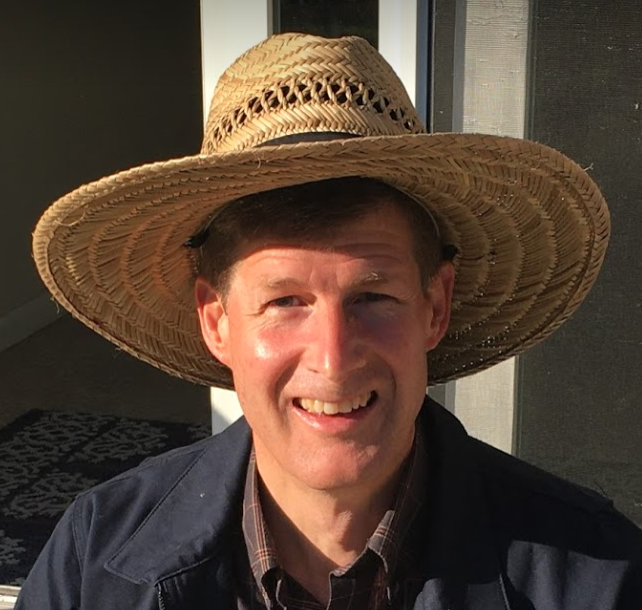
What a 250-mile bike ride taught me about connection, perseverance, and second chances.

On August 21st at 8:39 p.m., I rolled onto the Provo, Utah FrontRunner platform with my Retrospec Beaumont e-bike. 120.6 miles. 25.2 hours. Exhausted—but jubilant,
I had seven minutes to get my bike onto the train before it departed for Ogden.

This was the longest and final segment of my America 250 Miles on a Bike journey. Six rides, beginning in May with the Ogden-Riverdale Centennial Trail, had taken me through some of northern Utah's most beautiful landscapes: around Huntsville and Pineview Reservoir on Independence Day, along the trails overlooking Deer Creek Reservoir, across Antelope Island by moonlight, and finally down the Provo River Parkway from Utah Lake toward its canyon source.


I began the challenge because I wanted to celebrate America's 250th birthday in a way that fit me. Biking gave me a way to see the place I call home, challenge myself, and experience firsthand some of the trails that connect our communities.
But somewhere along those 250 miles, the ride became about something more.
It became a reflection on what it takes to build—and rebuild—a life.
You Don't Ride 250 Miles
My first ride was only 28 miles, with my son Dan. I wasn't an experienced cyclist with all the right gear. Would my e-bike make it? Did I have enough water? What if I got a flat?
We rode along the Weber River, through South Ogden, Uintah, Riverdale and Ogden. I stopped repeatedly to photograph the pastures, waterfowl and bridges.
The scenery surprised even Dan, who bikes far more than I do.
I made it 26 miles before my battery died. Those last two miles, pedaling a fully loaded e-bike without its motor, taught me something: I could do this.
Each ride taught me something new: I needed better sunglasses, A water bottle attached to my bike. more food, and better planning. Most importantly, I learned to take the journey one segment at a time.

That became especially important on my final ride. On August 20th at 7:30 p.m., I left my South Ogden home and headed north to join the Ogden River Trail, following one trail after another to the Denver & Rio Grande Western Trail. By 9 p.m., my battery had died. I still had miles to go.
The interstate was less than a mile away, but the hedges along the paved trail made it feel as though I were riding through another world. I passed homes, cookouts, baseball games and teenagers on trampolines. Families were settling in for the night.
And I kept pedaling. Eventually I reached my overnight stop in Centerville, crossed the interstate, found my way to my room with GPS, showered, ate, and collapsed into bed.
To beat the forecasted 103'F heat, I was back on the trail the next morning at 6 a.m.
That's when the lesson became clear:
You don't ride 250 miles. You ride one mile, then another, then another.
The Power of Connection
That morning I followed a remarkable chain of trails: the Denver & Rio Grande Western Trail, Legacy Parkway Trail, Jordan River Trail, Murdock Canal Trail and finally the Provo River Parkway. None of those trails, by itself, would have taken me from Ogden to Provo.
Their connection did.
I found myself thinking about the people and organizations that built those connections. Rails-to-Trails and countless local communities and volunteers have created pathways that allow people to move farther than they could go alone. They were, in a sense, my bridge builders. And I began thinking about how desperately people need those same kinds of connections in their lives.

At the Salt Lake International Peace Gardens, I stopped to take a picture in front of the China Garden. A woman walking nearby didn't speak English, and I didn't speak her language. But somehow, through gestures, we understood each other. She agreed to take my picture in front of the China Garden. The gardens were created to celebrate different nations and cultures while bringing them together in one peaceful place.
It struck me that this is what connection can do. It doesn't erase our differences. Instead, it gives us a place to belong together.

Later that day, riding through 100-degree heat, I found another kind of connection.
At mile 78, I reached a restaurant just off the trail. I desperately needed food, water, air conditioning—and a place to recharge my bike. The restaurant was called “Recharge Pub & Grill”. Marie, the hostess, greeted me with a smile. A sandwich, fruit juice, popcorn and an hour in the air conditioning felt like a miracle. I so appreciated that connection to electricity!

The people who had created the trail, those who maintained the park and provided water and restrooms—and Marie who simply welcomed a tired cyclist each made my ride not only possible but also enjoyable. The journey reminded me how much of life depends on connections we didn't build ourselves.
What a Farm Taught Me About a Life
Near the end of the ride, I passed through the Galena Soo'nkahni Preserve into the Bluffdale narrows. Beside the trail, I noticed a small farmstead. There were goats, chickens and a turkey. A father was caring for the property while the storm raged around him. It looked like a little piece of paradise tucked between the highway and the growing metropolitan area.

I thought about the seeds he was planting—not just in the soil, but in the lives of his children. They would learn to care for animals. They would experience the rhythms of nature. They would discover the law of the harvest: A seed doesn't become a harvest in a day. It takes time, work, patience, and persistence.
And then, just a few miles later, I saw the opposite picture. At mile 112, I passed a man sitting alone beside the trail with his bags and belongings. He appeared to be preparing to survive another night without a home. I didn't stop. I was racing the clock to catch my train. But I haven't stopped thinking about him. The contrast was striking. One person had land, purpose, relationships and a place to call home. The other appeared to have almost none of those things. And I realized that people, like seeds, need the right conditions to grow. A person doesn't rebuild a life in a day. It takes a place. It takes purpose. It takes work. It takes relationships. It takes people who believe that a future is still possible.

Rebuilding Lives at Grow Ogden
This is why the bike ride became so meaningful to me. At Grow Ogden, a project of Eden Streets, we use farming to help people facing homelessness rebuild those very connections. Though our farm is less than half an acre, interns prepare soil, plant seeds, water, weed and eventually harvest. It becomes a home to them, a place of peace, a means to connect with the land.
But we aren't simply growing vegetables. We are growing opportunity, work, relationships and human potential. Over 16 weeks, interns experience the simple discipline of showing up for work, learning new skills, working alongside others, overcoming obstacles and discovering that they CAN contribute. They learn that hard things can make us stronger, that our past does not have to define our future, that goals can be achieved one step at a time, and that there are people in the community willing to walk alongside them.
In other words, they learn the same lesson my bike taught me:
You don't have to go 250 miles today. You just have to take the next mile.

What Kind of America Will We Build?
Perhaps the America worth celebrating isn't simply the America that was built over the past 250 years. Perhaps it is the America we choose to build next.
We have inherited an extraordinary country—along with The Constitution, the Bill of Rights, institutions, communities and freedoms that generations before us worked and sacrificed to create. But the physical bridges between our cities aren't the only bridges we need.

We need person-to-person bridges - bridges across poverty, bridges across homelessness, bridges across loneliness and disconnection, and bridges across the divides that have grown between Americans.

What does freedom mean if someone has no meaningful way back into society? I believe freedom includes the opportunity to work, contribute, belong and build a future. A person experiencing homelessness may have lost much more than a house. They may have lost purpose, daily rhythm, relationships, confidence, income and a sense of belonging. Grow Ogden tries to rebuild those things through something wonderfully ordinary: Going to work on a farm.
As I think about America 250 years from now—in the year 2276—I envision a country where people still believe in second chances.. I see an America where every person has an opportunity to contribute. I rejoice in America where we build bridges instead of walls between one another. I celebrate an America where we recognize that my neighbor's success—or suffering—affects me, because we belong to one another.
My 250-mile bike ride was ultimately a journey about movement, perseverance, freedom and connection. And it became a metaphor for the work we are doing at Eden Streets.
One mile at a time. One person at a time. One life at a time. The physical bridges are mostly built. Now let's build the human ones. Let's create an America where people facing homelessness can find a path back to stability, dignity, work, and community. Let's build an America where everyone has the opportunity to contribute.
Grow food. Grow jobs. Grow hope. Eden Streets relaunches lives through farming.
Eden Streets envisions farms everywhere that cultivate vibrant, connected communities.
Written September 5, 2026 | Karl Ebeling, Executive Director of Eden Streets


Comments